
In 2026 Florida buyers and home inspectors look past the tile line and the color of the water. They check three practical things: whether the shell holds water, how the pool handles salt systems and automation, and how many near-term repairs the report will list. Etched plaster, hollow spots, and a thin liner near the end of its life create the same outcome—extra conditions, repair credits, and higher ownership risk. A thick 60 mil reinforced PVC membrane Cefil — installed by an experienced Wellington pool construction company — changes what the inspector records and what the next owner inherits.
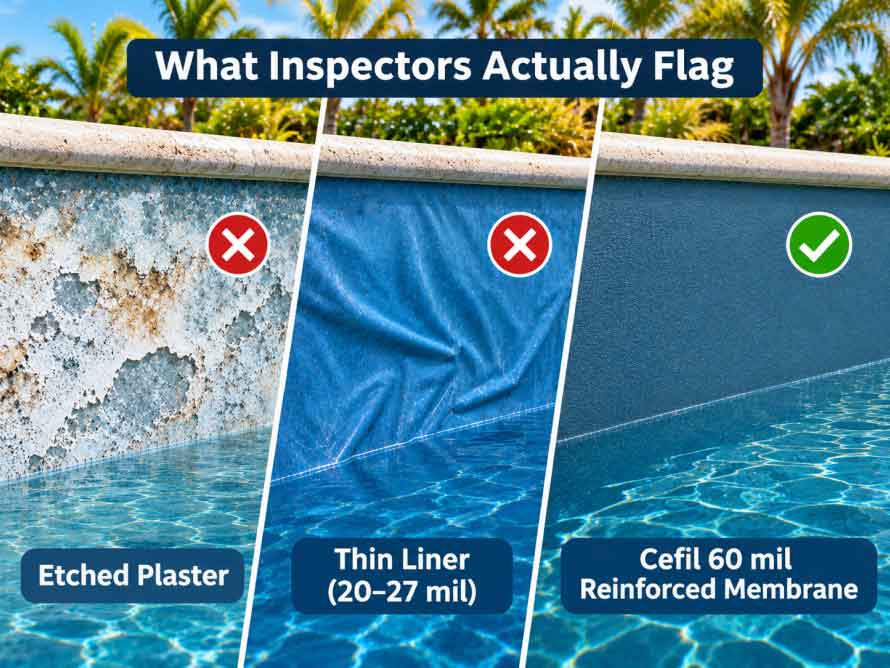
What Inspectors Actually Flag
A standard Florida pool inspection is not a beauty contest. Inspectors document water loss, surface condition, and structural indicators that affect insurance and future repair costs.
Common findings on traditional finishes include:
- Etched or stained plaster from pH swings, salt, or Florida’s aggressive water chemistry. Etching looks cosmetic but signals an open, porous surface that continues to degrade.
- Hollow spots and delaminating plaster. Tapping the walls reveals voids where the finish has separated from the shell. These areas eventually crack and leak.
- Visible cracks at the floor-to-wall transition, around fittings, or along the bond beam. In high-water-table areas these cracks often mean water is already leaving the pool or groundwater is pushing inward.
- Thin 20–27 mil vinyl liners that are faded, wrinkled, brittle, or patched. Many are already past the typical 5–7 year service window. Inspectors note remaining life and the near-certainty of replacement.
- Active or suspected leaks. A pool that loses more than normal evaporation appears on the report as a “monitor” or “repair recommended” item. That language moves money.
These items do not always kill a sale, but they produce repair credits, price adjustments, and buyer hesitation. They also complicate insurance discussions when a claim later appears. Carriers and underwriters prefer clear evidence that the vessel is dry and the finish is still within a predictable service life.
What a Thick 60-Mil Finish Changes
A thick 60 mil reinforced PVC membrane (two PVC layers with an internal polyester mesh) sits over the existing shell or a new ICF structure as an independent waterproof barrier. Inspectors and buyers see a different set of facts:
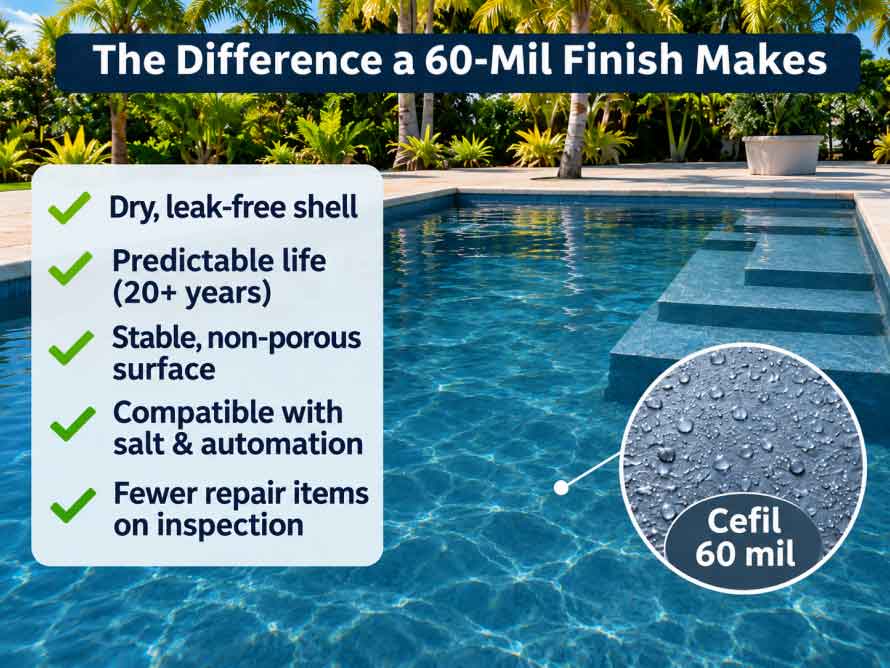
- The shell stays dry. Water is contained by the membrane, not by plaster or a thin stretched liner. Hairline movement or old cracks remain isolated underneath.
- Remaining life is predictable. Cefil membranes are engineered for 20+ years with normal care. A documented installation date and product specification give the inspector a clear timeline instead of “liner looks worn, recommend replacement.”
- Surface condition is stable. The non-porous finish does not etch like plaster, does not develop permanent wrinkles that trap dirt, and resists UV and chemical attack better than thin vinyl.
- Salt and automation systems run on a more forgiving surface. Salt chlorinators and automated chemistry controllers cause fewer surface-related callbacks because the membrane does not rely on perfect calcium balance the way plaster does.
- Inspection friction drops. Fewer “repair recommended” lines mean less negotiation at the inspection stage and cleaner documentation for the next owner or an insurance file.
The result is a pool that presents as lower-risk ownership rather than a project waiting to happen.
Ownership ROI and Insurance Angle
The financial case is ownership cost, not a pure resale multiplier. Over 15–20 years the differences compound:
- Thin liners typically require two or three full replacements. Each cycle brings material, labor, downtime, and water replacement.
- Plaster or pebble finishes in Florida often need attention every 7–12 years. Etching, staining, or hollow spots return if chemistry or shell movement continues.
- A thick 60 mil membrane commonly lasts through one ownership cycle with only routine maintenance. Chemical demand is frequently lower because the surface is smooth and non-porous.
- Leak-related water loss stops. That reduces water bills and the risk of saturated soil, deck movement, or equipment damage that can become insurance issues.
- Documentation is straightforward. Installation records, product data, and photos of a sound membrane give adjusters and future buyers a clear before-and-after file instead of an argument about pre-existing wear.
None of this guarantees a higher sale price or a policy discount. It reduces the frequency and severity of the problems that generate repair credits, claims disputes, and ongoing owner expense.

Renovating an Existing Shell or Building New
The same membrane solves two different situations.
For an old pool being prepared for sale, installing a thick Cefil 60 mil membrane over etched plaster or painted pebble—or in place of a worn-out thin liner—is often faster and cleaner than completely dismantling and replastering the pool. The existing shell remains, cracks are bridged, the surface is renewed, and the pool can be presented with a known remaining life and a dry vessel. Buyers and inspectors see a finished waterproofing system rather than a surface that will need work soon.
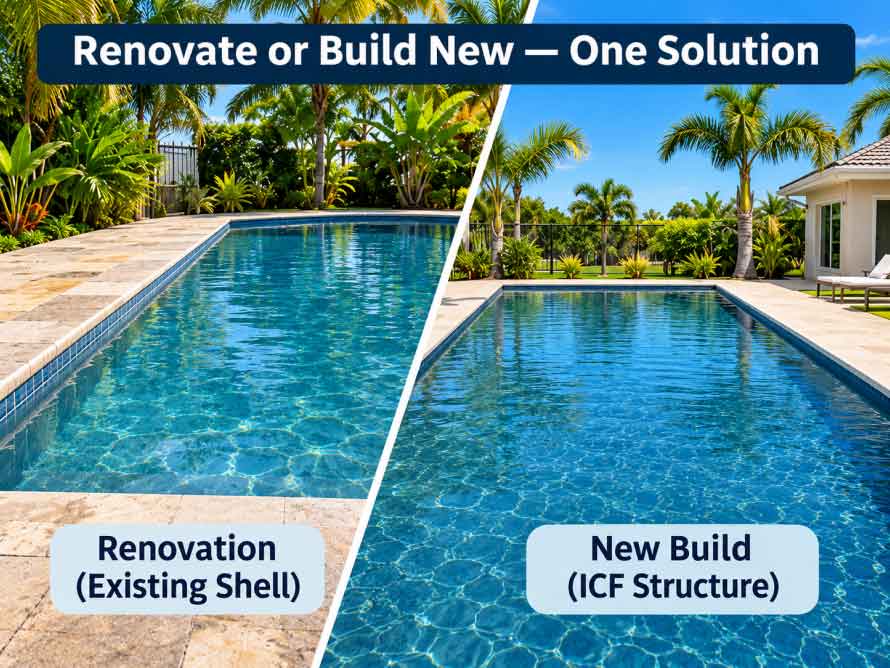
For new construction the stronger long-term argument is ICF structure plus a thick 60 mil Cefil membrane instead of gunite under plaster. ICF provides continuous insulation and a monolithic wall. The thick membrane supplies independent waterproofing that does not depend on the cement finish staying bonded. The combination eliminates the classic Florida cycle of plaster etching, hollow spots, and repeat resurfacing while giving the inspector a simple, documentable finish.
Practical Takeaway
Inspectors and 2026 Florida buyers notice whether the shell is dry, whether the finish is still inside a predictable service window, and whether salt or automation systems will create the next set of problems. Etched plaster, hollow spots, and thin liners near the end of their life create repair language and ownership risk. A thick 60 mil reinforced PVC membrane produces a dry shell, a known lifespan, and fewer items that require negotiation.
Whether you are preparing an existing pool for sale or choosing the construction method for a new one, the thick membrane changes what appears on the inspection report and what the owner pays to keep the pool running.
SAKKO POOL supplies and installs Cefil thick 60 mil reinforced PVC membranes on renovations and new ICF pools across Florida, and supplies the membrane nationwide. If you want an inspection-ready surface or a shell that does not rely on plaster, request a site review or quote.
Have Questions?
Talk to our specialist! Just fill out the form, and we’ll give you a call!
FAQ
Other articles on this topic
Florida Smart Pool Automation: ICF + Cefil 60-Mil Cut Bills 40–60%
Heat Pumps and Chillers on an ICF Pool: Smaller Equipment, Shorter Runtime

HOA and Light-Commercial Pools: The Plaster-to-Membrane Renovation Cycle
Infinity Edges and Raised Spas: How ICF and a Welded 60-Mil Membrane Handle the Details
Renovating Steel-Wall & Panel Pools: Why Cefil 60-Mil Pool Liner Wins

Pool Insurance in Florida: Does ICF + 60-Mil PVC Change Claims
Drought-Ready Pools: ICF + 60-Mil PVC Cut Evaporation & Refill Costs
Pool Overlay vs Tear-Out: When a 60-Mil Reinforced Membrane Wins