
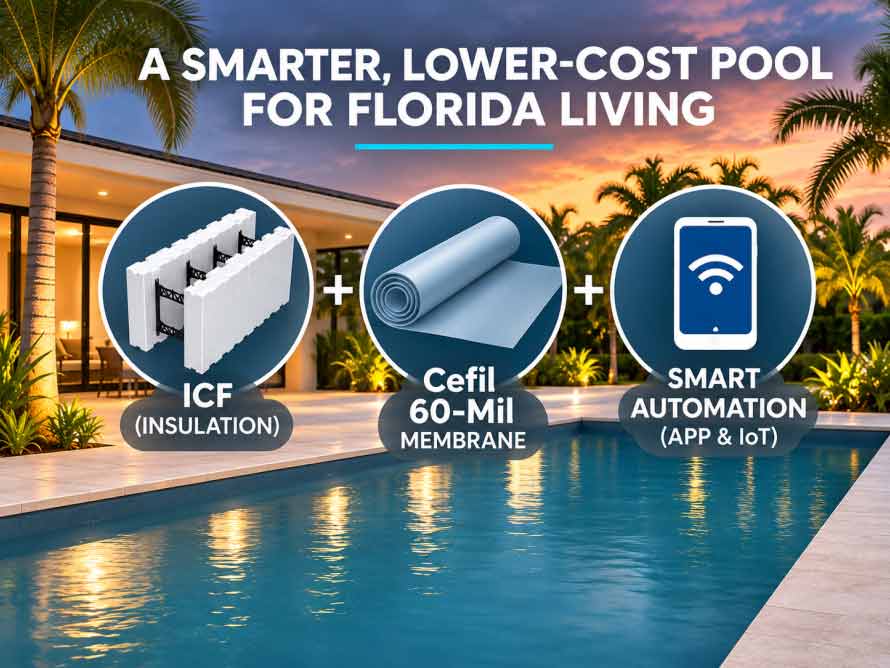
Florida pool owners know the feeling: the monthly electric bill arrives and the pool equipment pad is the main culprit. Between the pump, heater, and chemical management, a traditional pool can easily add 150–300+ per month in warmer months. In 2025–2026, smart pool automation has become one of the strongest trends in the industry—and when you pair it with ICF swimming pool construction in Florida and a thick reinforced Cefil 60-mil PVC membrane, the savings become dramatic.
The combination is not just convenient. It creates a true synergy: the building method and surface already demand less energy and chemicals, while the app and IoT layer optimize every remaining hour of runtime. The result for many Florida homeowners is a 40–60% reduction in energy and maintenance costs compared with a conventional gunite or thin-liner pool running on basic timers.
Why This Combination Works So Well
ICF (Insulated Concrete Forms) pools use expanded polystyrene or polyurethane blocks that create a continuous thermal barrier around the shell. Heat loss through the walls and floor drops dramatically—often by 50–70% versus traditional concrete. The water stays warmer longer with far less heater runtime, and in summer the same insulation helps keep temperatures from climbing too high.
A welded Cefil 60-mil reinforced PVC membrane adds the second major advantage. Unlike porous plaster or thin vinyl, the smooth, non-porous surface resists algae and biofilm, requires fewer chemicals, and is far easier to clean. It also handles Florida’s UV, salt systems, and chemical levels without premature degradation.
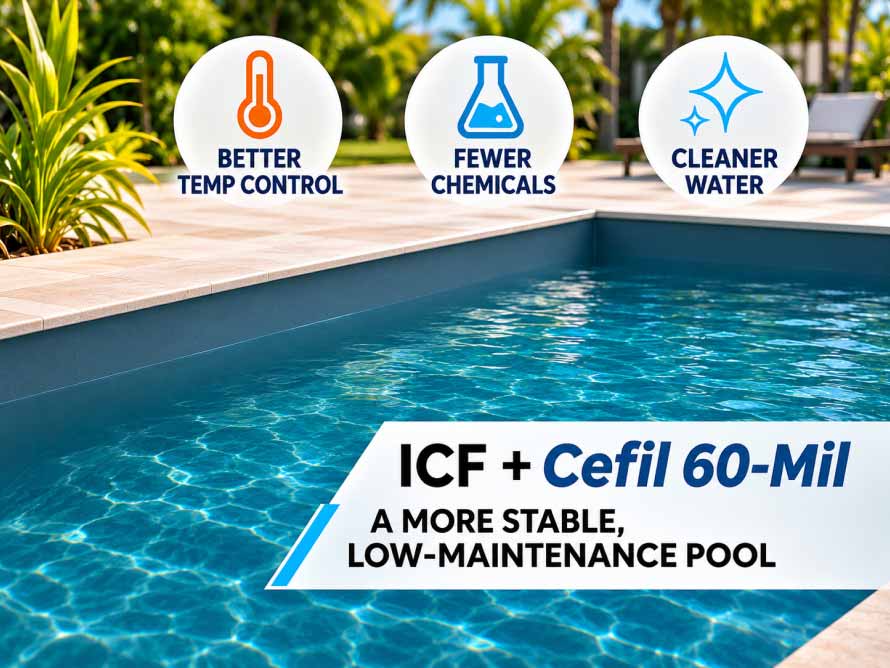
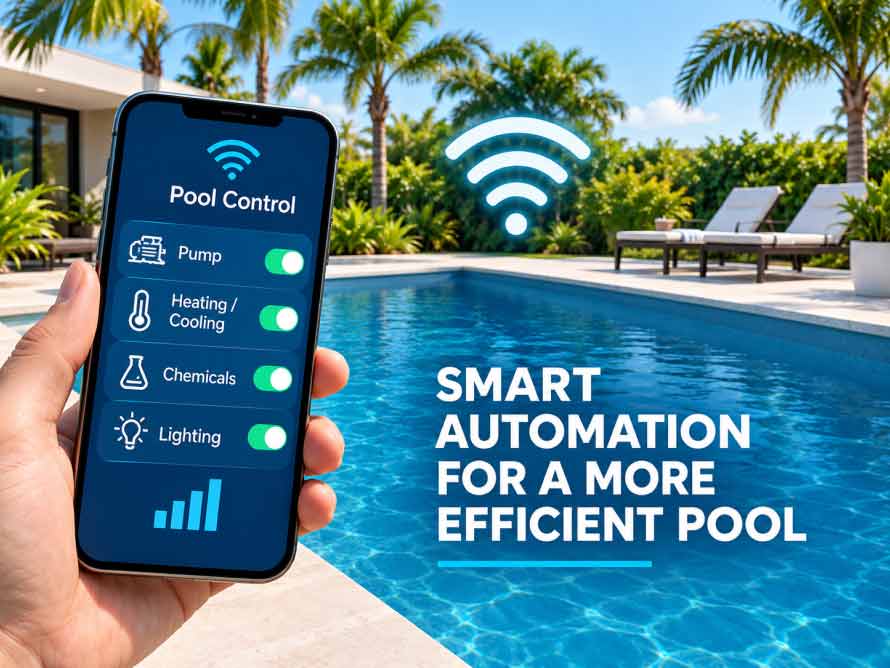
Smart automation ties these physical advantages together. Modern systems (app-controlled variable-speed pumps, automated chemical dosing, connected heaters/chillers, and remote monitoring) no longer run on fixed schedules. They respond to real conditions—water temperature, flow rates, chemical levels, and even weather forecasts.
How the Savings Actually Happen
Here is where the 40–60% figure comes from in practice:
- Lighting, water features, and covers — LED lighting and automated covers (when used) further reduce energy and evaporation. All of it can be controlled from one phone screen.
- Variable-speed pump optimization — A properly programmed VS pump already cuts energy use 50–75% versus single-speed models. On an ICF pool the required turnover is often lower because the water chemistry stays stable longer on a clean 60-mil surface. The app can run the pump at the lowest effective speed for longer periods or only when sensors indicate it is needed.
- Heater and chiller runtime drops sharply — With superior insulation, a heat pump or chiller may run only a fraction of the hours required on a standard shell. Automation schedules heating around actual occupancy and outdoor temperature instead of keeping the water at a constant setpoint 24/7.
- Chemical and water savings — Automated chemical feeders and pH/ORP sensors maintain tighter control. Combined with the non-porous Cefil membrane (which does not absorb or release chemicals the way plaster does), many owners see 30–50% lower chemical consumption. Less chemical also means less frequent draining and refilling.
- Predictive maintenance and remote monitoring — IoT sensors track pump current, filter pressure, water level, and chemical trends. The app alerts you before a problem becomes expensive—clogged filters, failing seals, or rising chlorine demand—reducing emergency service calls.
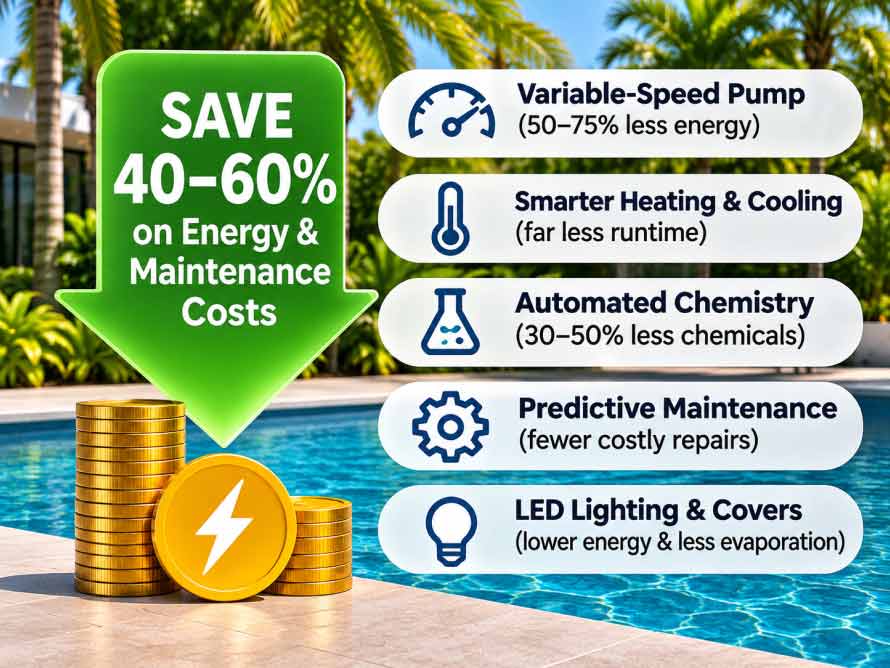
In Florida’s high-rate electricity markets these incremental reductions compound quickly. Homeowners who previously spent $2,000–$3,500 per year on pool energy and chemicals often report landing in the $800–$1,800 range after switching to this integrated approach.
What a Smart ICF + Cefil System Typically Includes
Most of our clients choose a practical, high-impact package rather than every possible gadget:
- Variable-speed pump with app scheduling and flow sensors
- Automated chemical controller (salt, liquid chlorine, or mineral system) with remote alerts
- Connected heat pump or hybrid heating/chilling unit
- Smart lighting scenes and optional automated cover or water-level control
- Central app (Hayward, Pentair, Jandy, or similar) that also integrates with common smart-home platforms
Because the ICF shell and Cefil membrane already reduce the baseline load, the automation does not have to work as hard. Equipment can often be right-sized smaller, which lowers both upfront cost and ongoing consumption.
Real-World Advantages for Florida Homeowners
- Lower monthly bills that remain stable even during heat waves or heavy use seasons
- Less time spent testing water, adjusting timers, or calling the service company
- Cleaner water with fewer algae outbreaks thanks to the combination of stable chemistry and a non-porous surface
- Better resale appeal—buyers increasingly look for energy-efficient, app-controlled outdoor living spaces
- Resilience during storms: many systems allow you to lower the water level, adjust circulation, or shut down equipment remotely before a hurricane
The thick Cefil membrane – 60-mil pool liner – also protects the investment. Its durability and chemical resistance mean the surface itself rarely becomes the weak link that forces early resurfacing or liner replacement.
Is the Upgrade Worth It on an Existing Pool?
Yes—especially during a renovation. If you are overlaying an aging gunite or plaster pool with a new Cefil 60-mil membrane, it is the ideal moment to upgrade the equipment pad to variable-speed and smart controls. The membrane installation already requires draining and access; adding automation at the same time maximizes the return.
For new ICF construction the package is even more seamless. The insulated shell, welded membrane, and connected equipment are designed together from the start, delivering the full efficiency potential on day one.
Bottom Line
Smart automation is powerful on any pool. On an ICF pool finished with Cefil 60-mil reinforced PVC membrane it becomes transformative. The structure and surface already cut the energy and chemical demand; the app and IoT layer make sure every remaining watt and ounce is used only when necessary. The result is a lower-cost, lower-maintenance pool that still delivers the clean water and comfortable temperatures Florida homeowners expect.
If you are planning a new ICF pool or a membrane renovation and want to maximize energy savings, the combination of smart controls with our Cefil 60-mil system is one of the highest-ROI decisions you can make. Contact SAKKO POOL for a consultation—we design and install the full package so the insulation, membrane, and automation work together from the beginning.
Have Questions?
Talk to our specialist! Just fill out the form, and we’ll give you a call!
FAQ
Other articles on this topic
Selling a Florida Pool: 60-Mil Membrane vs Plaster for Inspectors
Heat Pumps and Chillers on an ICF Pool: Smaller Equipment, Shorter Runtime

HOA and Light-Commercial Pools: The Plaster-to-Membrane Renovation Cycle
Infinity Edges and Raised Spas: How ICF and a Welded 60-Mil Membrane Handle the Details
Renovating Steel-Wall & Panel Pools: Why Cefil 60-Mil Pool Liner Wins

Pool Insurance in Florida: Does ICF + 60-Mil PVC Change Claims
Drought-Ready Pools: ICF + 60-Mil PVC Cut Evaporation & Refill Costs
Pool Overlay vs Tear-Out: When a 60-Mil Reinforced Membrane Wins