Across the United States, a large share of in-ground pools are steel-wall or panel systems that have already lived through one or two liner replacements. The usual plan is simple: order another 20- or 27-mil vinyl liner, hang it in the track, and reset the clock for seven to twelve years. That cycle works until the walls, the floor, or the fittings stop cooperating. A Cefil 60-mil reinforced PVC membrane is a different category of renovation. It is heat-welded on site, built around a polyester mesh core, and designed as a long-life waterproof finish rather than a consumable bag. For teams in custom pool construction in Florida, it has become the preferred renovation path on steel-wall systems.
Why the Next Thin Liner Is a Short Fix
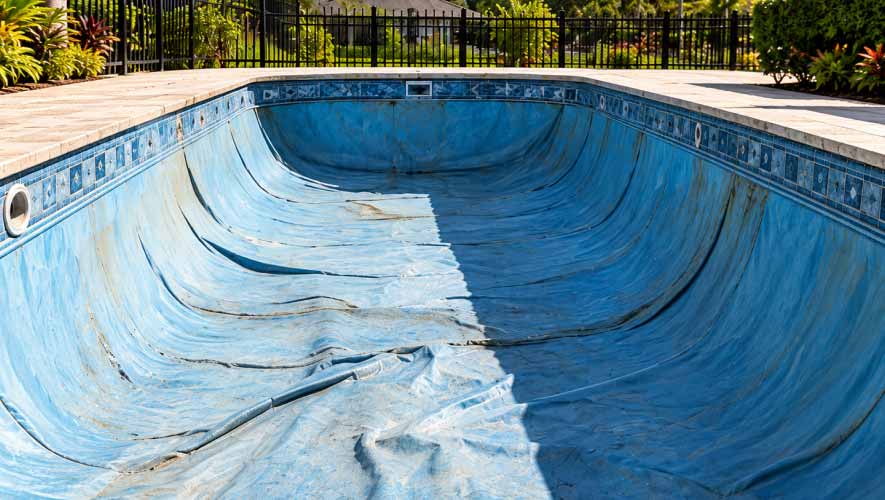
A standard vinyl liner is manufactured to a pattern. It has to match the wall height, the floor profile, and every step or bench the pool had when it was built. After 15 or 30 years, many panel pools no longer match that drawing.
- Walls bow, rust at the waterline, or separate at the joints.
- The sand or vermiculite floor settles and creates wrinkles the new liner cannot hide.
- Coping tracks loosen, and faceplate gaskets weep around returns, lights, and skimmers.
- A thin sheet punctures easily and stretches under strong sun.
Replacing it restores the look. It does not upgrade the waterproofing system. In another decade the same owner is draining the pool again, paying for a new pattern, and hoping the walls still hold a true line.
What a 60-Mil Reinforced Membrane Changes
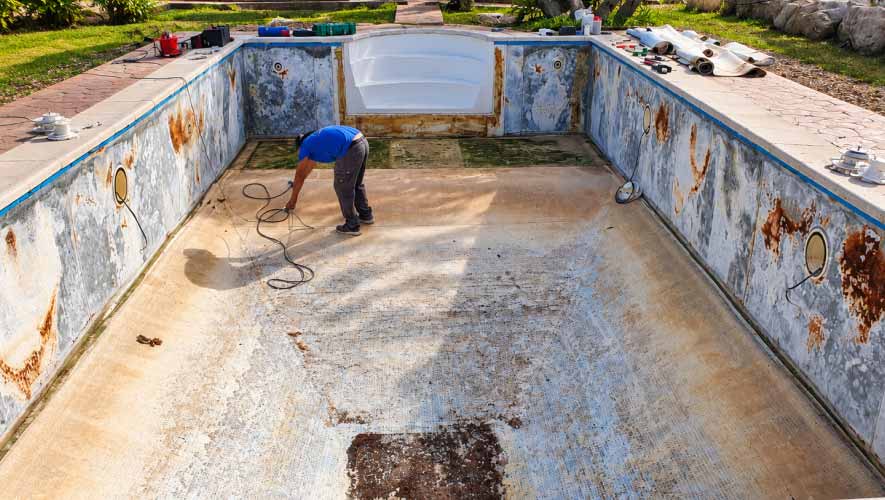
Cefil 60 mil is a three-layer PVC membrane about 1.5 mm thick, with a polyester mesh locked in the core and a UV-stable top layer. Installers cut and heat-weld it on the pool, so the finish follows the shell that exists today, not the shell that was ordered years ago. The same family of reinforced membranes is used on demanding commercial pools, which is a different expectation than a residential bag liner.
That difference matters on steel-wall and panel renovations:
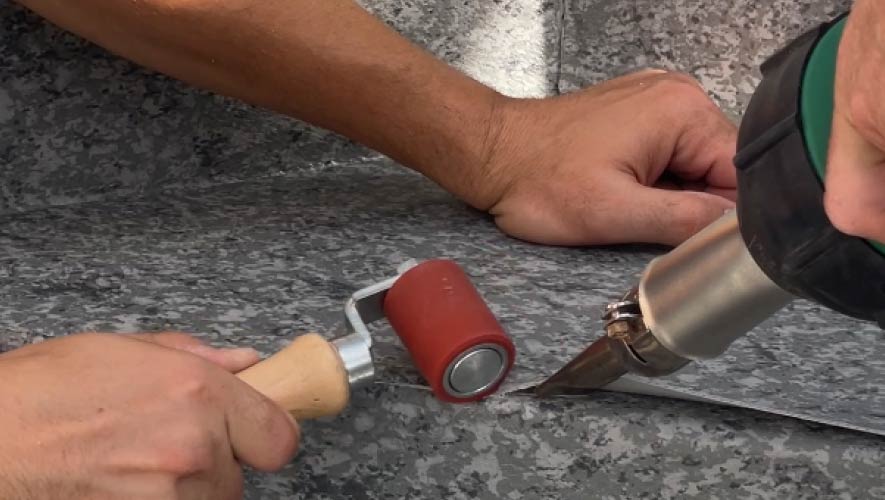
- Seams are welded, not just overlapped, so the interior becomes a continuous waterproof skin.
- Steps, benches, and odd corners are built in the field instead of forced into a factory pattern.
- At 60 mil with internal mesh, the sheet resists punctures and tears far better than a 20–27 mil liner.
- Properly installed and maintained, these membranes routinely deliver 20+ years of service, often with a 10-year waterproofing warranty. A thin liner is usually planned as a 7- to 12-year replacement.
The visual upgrade is real, but it is not the main point. The main point is getting off a replacement schedule that treats the interior as a disposable part.
The Shell Still Has to Be Honest
A membrane is not a substitute for a failed structure. Before any Cefil installation, the walls and floor need a clear assessment.
- Steel panels should be checked for heavy rust, open joints, and movement at the braces.
- Soft spots in the floor are dug out and rebuilt so the membrane has a firm, smooth base.
- Old tracks, lights, and fittings are replaced or adapted so every penetration is sealed to the new sheet.
- Sharp edges and fastener heads are covered. A thick pool membrane is tough, not indestructible.
If the walls are still straight and the floor can be stabilized, a membrane renovation keeps the pool and avoids a full dig-out. If the steel is gone, the honest path is a new shell. That is where ICF block construction, finished with the same Cefil 60-mil membrane, replaces a tired panel system with an insulated concrete structure built for decades, not for the next liner cycle.
Where the Thick Membrane Wins Day to Day
Owners feel the difference after the water is back in.
- Cleaning is simpler. The non-porous surface does not give algae the same grip as a rough, aged finish, and stains do not lock into a porous wall.
- Chemicals stay in the water. A welded sheet does not absorb sanitizer the way a porous surface can, which helps keep dosing more predictable.
- Minor ground movement is less likely to open a leak, because the membrane flexes instead of cracking like a rigid coating.
- Color and texture are chosen at installation, so an older panel pool can look current without tearing out the yard.
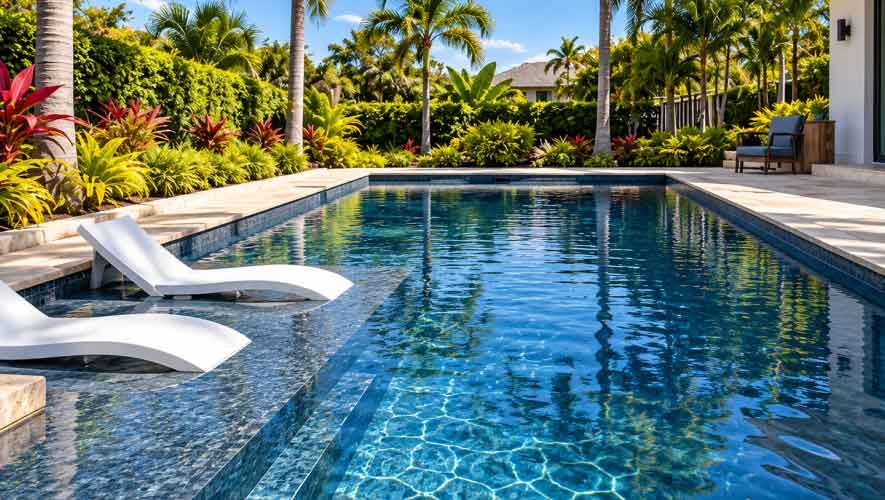
Sakko Pool supplies Cefil 60-mil membranes nationwide as the official U.S. representative of Cefil, and installs them on steel-wall, panel, concrete, fiberglass, and tile pools. The same membrane is the finished waterproofing layer on new ICF pools built in Florida. For a contractor replacing liners every season, it is also a way to offer a longer-life interior instead of repeating the same short job.
When to Stop Replacing Liners
Choose another thin liner only if the walls are true, the floor is stable, and the goal is the lowest price this season. Choose a Cefil 60-mil renovation when the pool has already had one liner failure, the shape no longer matches a stock pattern, or the owner wants to leave the replacement cycle. Choose a new ICF pool when the panels themselves are the problem and a surface upgrade would only hide it.
If you are planning a steel-wall or panel renovation, SAKKO POOL can review the shell, supply the membrane, or handle the installation. Fill out the form and a specialist will call you back.
Have Questions?
Talk to our specialist! Just fill out the form, and we’ll give you a call!
FAQ
Other articles on this topic
Florida Smart Pool Automation: ICF + Cefil 60-Mil Cut Bills 40–60%
Selling a Florida Pool: 60-Mil Membrane vs Plaster for Inspectors
Heat Pumps and Chillers on an ICF Pool: Smaller Equipment, Shorter Runtime

HOA and Light-Commercial Pools: The Plaster-to-Membrane Renovation Cycle
Infinity Edges and Raised Spas: How ICF and a Welded 60-Mil Membrane Handle the Details

Pool Insurance in Florida: Does ICF + 60-Mil PVC Change Claims
Drought-Ready Pools: ICF + 60-Mil PVC Cut Evaporation & Refill Costs
Pool Overlay vs Tear-Out: When a 60-Mil Reinforced Membrane Wins