Most people focus on the sticker price of a new pool. Builders quote the construction cost, buyers compare numbers, and the conversation often ends there. In 2026 that approach is outdated. The real financial picture of pool ownership unfolds over 10 to 20 years and includes energy, chemicals, repairs, liner replacements, and the eventual impact on home value. When those factors are counted, premium pool construction methods frequently deliver a clearer advantage.
Looking Beyond the Build Price
A traditional concrete or thin-vinyl pool may appear less expensive at the start. Yet many of those pools carry ongoing expenses that compound over time:
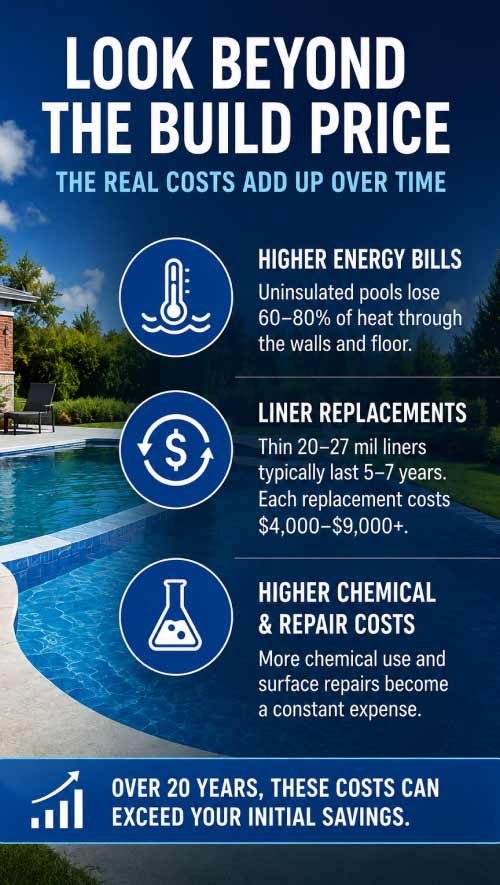
- Uninsulated shells lose heat rapidly through the walls and floor—studies show 60–80% of heat loss occurs this way—so heaters run longer and electricity or gas bills climb.
- Thin 20–27 mil PVC liners typically last only 5–7 years before fading, wrinkling, cracking, or developing leaks. Replacement often costs $4,000–$9,000 each time, plus labor and downtime.
- Chemical demand stays higher because thinner materials are more sensitive to water chemistry imbalances, and surface repairs become routine as plaster chips or seams fail.
Over two decades those recurring costs can easily exceed the original construction savings. Owners who planned for a one-time investment discover they are managing a continuous expense stream.
The Premium Alternative: ICF Shells + 60 Mil Reinforced Membranes
Sakko Pool specializes in a different approach: insulated concrete form (ICF) construction paired with Cefil 60 mil pvc membrane liner. As the official U.S. representative of Cefil, we supply and install the same thick, polyester-mesh-reinforced membranes trusted on Olympic-level projects. The combination changes the ownership equation in measurable ways.
Key advantages include:
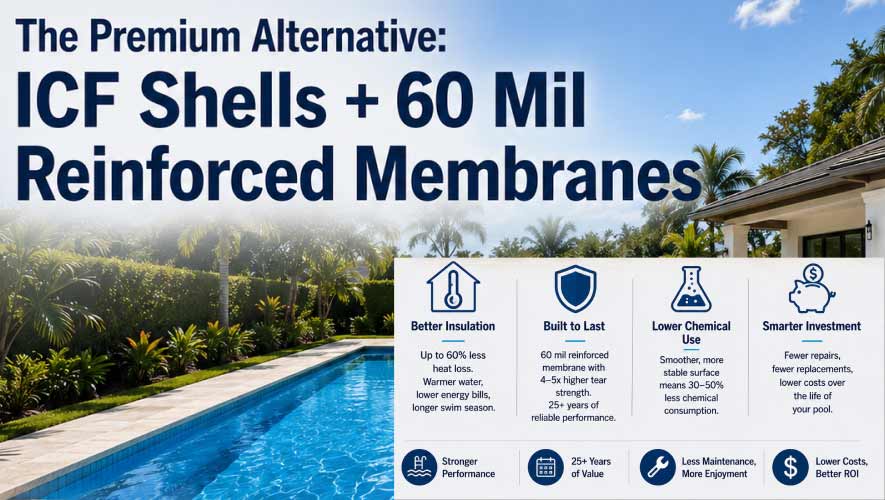
- ICF walls surround the concrete core with continuous EPS foam insulation on both faces, reducing heat loss through the shell by up to 60% compared with conventional concrete. Water temperature stays more stable, heaters cycle less often, and energy costs drop. In many climates the swimming season also stretches longer without extra heating expense.
- The 60 mil Cefil membrane is engineered for longevity. Unlike thin liners that stretch thin during installation, lose thickness at corners, and become brittle in cooler weather, the reinforced three-layer sheet maintains its full 60 mil gauge. Tear strength is four to five times higher. It remains flexible even at very low temperatures, resists UV and chemical attack thanks to protective lacquer and stabilizers, and does not develop permanent wrinkles that trap dirt and algae. Service life commonly reaches 25+ years or more with proper care—often eliminating two or three full thin liner replacements.
- Because the surface is smoother and more chemically stable, many owners report 30–50% lower chemical consumption. Fewer adjustments mean less time and money spent balancing water.
A 20-Year Cost Illustration
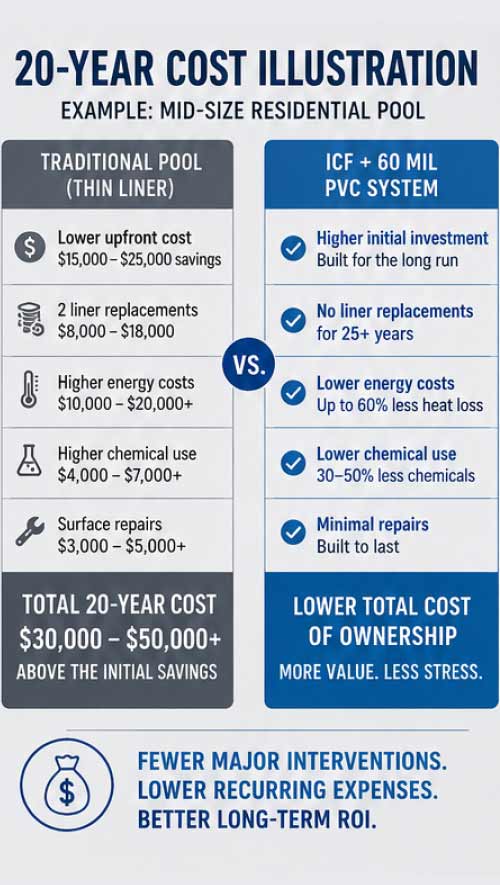
Consider a mid-size residential pool. A lower-cost build might save $15,000–$25,000 upfront. Over 20 years, however, two liner replacements, higher annual heating bills, elevated chemical use, and periodic surface repairs can add $30,000–$50,000 or more in cumulative costs, depending on climate, usage, and local energy rates. An ICF + 60 mil PVC system carries a higher initial investment but typically avoids most of those replacements and reduces the annual operating burden. The net result is frequently a lower total cost of ownership and fewer surprises.
Exact numbers vary by location, pool size, and heating habits, yet the directional advantage is consistent: fewer major interventions and lower recurring expenses improve long-term ROI.
Effect on Home Value
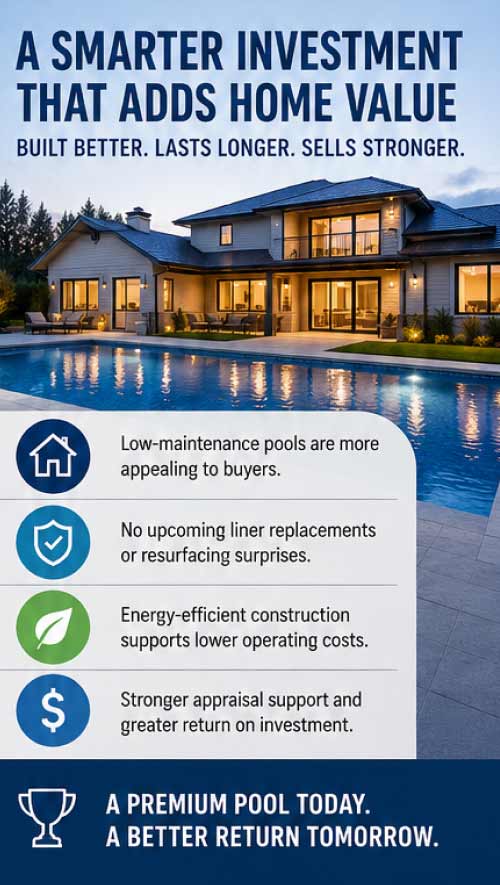
A well-built, low-maintenance pool is an asset rather than a liability when the property is sold. Buyers increasingly recognize the difference between a shell that will need resurfacing or a new liner soon and one engineered for decades of reliable service. Energy-efficient construction and a premium interior finish support stronger appraisal support and broader buyer appeal, especially in markets where outdoor living is a priority.
Choosing for the Long Run
In 2026 the smartest pool decision is the one that looks past the first invoice. Premium ICF construction combined with a 60 mil reinforced Cefil membrane reduces energy demand, extends the life of the waterproofing surface, lowers chemical and repair costs, and protects the investment for the life of the home. The higher upfront cost is offset by years of lower ownership expenses and greater peace of mind.
Sakko Pool builds these systems in Florida and supplies Cefil membranes nationwide. If you are planning a new pool or considering a renovation, request a detailed comparison tailored to your site and climate. Understanding the true cost of ownership is the first step toward a better long-term return.
Have Questions?
Talk to our specialist! Just fill out the form, and we’ll give you a call!
FAQ
Other articles on this topic
Custom Tanning Ledges: Why ICF + Cefil 60-Mil Beats Gunite & Thin Vinyl
Long-Term Pool Sustainability: ICF + Cefil 60-Mil for 20+ Years
Multi-Use Wellness Pools: ICF Structure + Cefil 60-Mil Membrane
Modern Pool Design: LED Lighting, Textures & 60-Mil Membranes

Family Pool Design with ICF & 60-Mil PVC Membrane: Safe for All Ages