A tanning ledge — also called a Baja shelf — is one of the most requested features in residential pools. It is the shallow platform where people read, kids splash safely, and guests lounge half in the water with a drink on the coping. In 2026 this zone is no longer a luxury add-on. It is the social heart of the backyard.
The problem is that most ledges are built with the same finishes used on deep walls. Gunite with plaster or pebble looks good on opening day, then fails first in the place that gets the most sun, furniture, and foot traffic. Thin 20–27 mil vinyl stretches, wrinkles, and punctures where chairs, toys, and bare feet work the surface.
There is a more durable way to build this zone: an ICF (Insulated Concrete Form) shell shaped for a true custom ledge, finished with a heat-welded Cefil 60 mil reinforced PVC membrane. This is the approach experienced Florida custom pool builder teams increasingly recommend — the structure and the waterproofing are designed together, so the shelf stays comfortable, safe, and watertight for decades instead of becoming the first repair on the invoice.
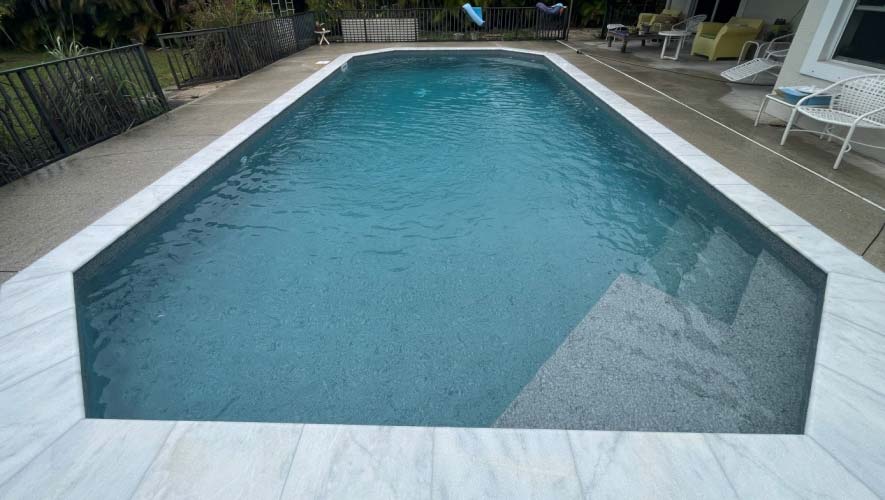
Why Gunite Ledges Age Faster Than the Rest of the Pool
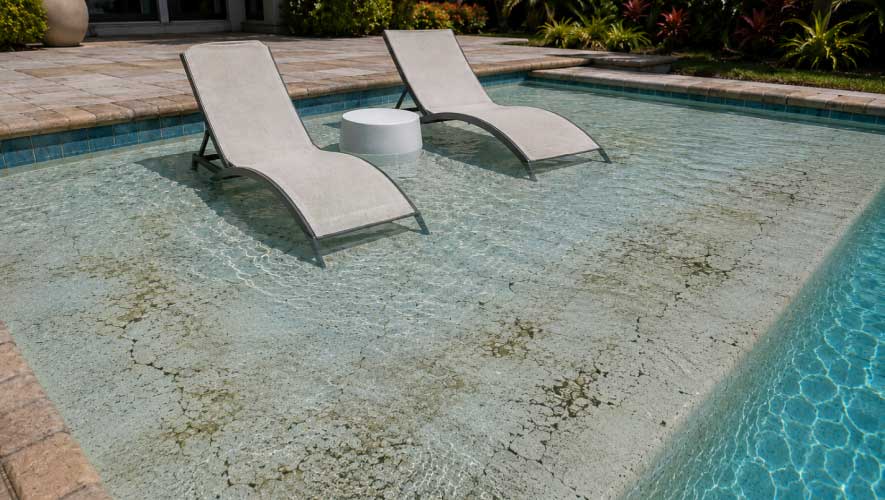
A Baja shelf is only 6 to 18 inches deep. That means more sunlight, more body oils, more furniture legs, and a higher concentration of chemicals near the surface. Plaster and aggregate finishes are porous. They etch when chemistry drifts. They stain from minerals, suntan lotion, and leaves. They become rough underfoot after a few seasons of acid washing.
Hairline cracks appear where the ledge meets the wall, the steps, or a raised spa. Water works into those cracks. In Florida, sandy soil and a high water table make movement worse. Resurfacing a shallow platform is not a small patch. You drain the pool, grind the surface, wait through another curing cycle, and live with dust and downtime.
Tile on a ledge looks premium in photos. In daily use it adds grout lines that hold algae. Wet glazed tile can be slick — the last thing you want where children sit and adults step out of a lounge chair. Homeowners who wanted a social, family-friendly shelf end up with a surface they hesitate to use.x with the shell or resist the next environmental stress.
Why Thin Vinyl Is a Poor Match for a Lounge Shelf
Thin vinyl liners are usually factory-made to the pool’s measurements, hung in a bead track around the coping, and pulled tight against the walls and floor with a vacuum placed behind the liner. On a wide, flat ledge — and at inside corners, step returns, and the coping bead — that vacuum fit plus the weight of the water stretches the sheet and thins it at the points that take the most wear. Lounge chairs, cooler legs, and kids’ toys find those weak spots first.
UV hits a tanning ledge all day. Fading and brittleness show here long before they show on the deep end. A wrinkled or loose liner is more than an eyesore. It creates trip points and water pockets under the sheet. When the floor of the shelf feels soft, water is already under the liner.
Replacing a thin liner every 5–7 years means draining the pool again and again. That is the opposite of a low-maintenance backyard.
The ICF Advantage: A Ledge That Is Part of the Structure
Insulating concrete forms let builders stack lightweight EPS blocks into the exact geometry of the pool before pouring a monolithic concrete core. The Baja shelf, benches, and steps are not afterthoughts added to a gunite shell. They are one piece with the walls and floor.
That matters in Florida soils and in any climate with ground movement. A monolithic ICF bowl resists the cracking that starts at sharp transitions. The built-in foam insulation also helps shallow water hold temperature. The shelf stays comfortable instead of turning cold at dawn or overheating against an uninsulated concrete mass.
Because the forms are precise, the finished ledge can be generous and clean. You can design a wide social shelf, a narrower cocktail ledge, or a shelf that wraps into a spa without the sloppy radii that make plaster finishing difficult. Equipment penetrations and lighting niches can be planned before the pour, so the membrane later welds around details instead of fighting them.
Why Cefil 60-Mil Belongs on That Shelf
Cefil 60 mil is a three-layer reinforced membrane — a genuinely premium pool liner with two PVC faces and a polyester mesh core, finished with an acrylic lacquer that includes antibacterial protection. It is heat-welded on site, so waterproofing is continuous across the ledge, the step risers, the benches, and the deep end.
On a tanning ledge this construction does jobs thin vinyl and plaster cannot:
- Thickness stays at a true 60 mil instead of stretching down at corners.
- Tear and puncture resistance is several times higher, which is critical where chairs and coolers sit in the water.
- Textured collections such as Passion and Nature offer Class C slip resistance — the rating you want under wet feet on a shallow platform.
- The non-porous face does not absorb suntan oil, minerals, or algae the way plaster does.
- Color and pattern stay stable under Florida sun because of the lacquer and UV stabilizers.
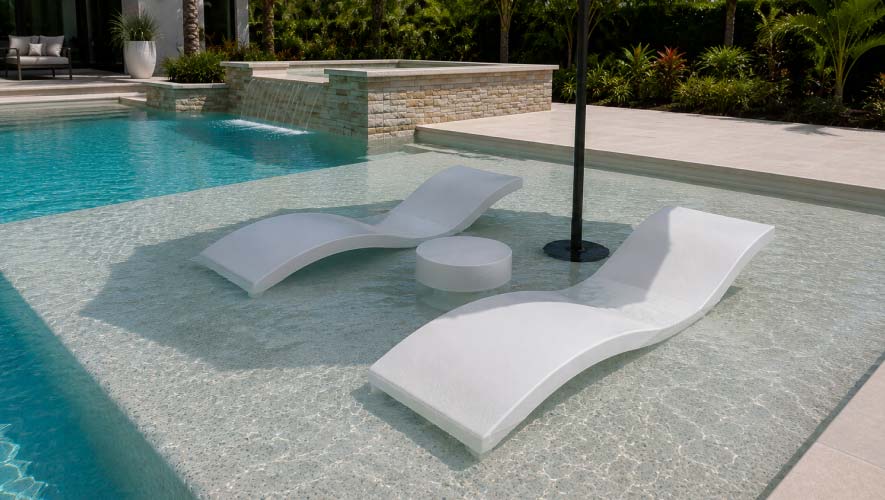
Dark Onyx and Nature tones give the deep lagoon look people photograph from the shelf. Lighter Classic and Passion tones keep the water bright and make the shallow zone feel larger and safer for children. If you want a stone look without grout, Nature and Victoria collections deliver texture without the maintenance of real stone.
Weekly cleaning is faster. You use fewer chemicals to keep the shelf looking new.
The Combination That Lasts
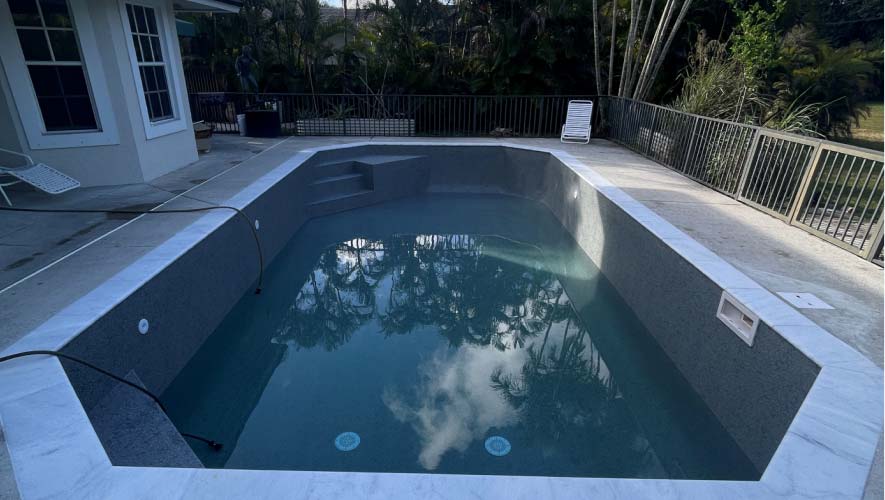
Pair the ICF shell with Cefil 60 mil and the ledge stops being the weak point of the pool. The structure does not crack with every soil shift. The membrane flexes with the shell instead of tearing. Heat-welded seams stay watertight across the wide, flat plane where thin liners usually fail first.
If you ever want a new color after 20+ years of service, the old membrane comes off and a new one goes on without destroying the pool shell. That is a remodel, not a rebuild.
Compared with a gunite-and-plaster shelf, you avoid repeated acid washes and resurfacing. Compared with a thin vinyl shelf, you avoid early wrinkles, leaks, and the soft-floor feel that means water is under the liner. You also keep the energy benefit of ICF insulation in the shallowest, most temperature-sensitive part of the pool.
New Build or Overlay
SAKKO POOL is the official U.S. representative of Cefil and an ICF pool builder based in Wellington, Florida. On a new project we design the tanning ledge as part of the ICF formwork, then finish the entire bowl with a thick 60 mil membrane.
On an existing gunite, plaster, pebble, or fiberglass pool, a full tear-out is not always required. If the shell is still sound, a 60 mil overlay can turn a failing, slippery shelf into a soft, non-slip, waterproof lounge zone without rebuilding the structure. That is often the faster and more affordable path for Florida homeowners who already have a ledge they like — they just no longer trust the finish.
A Baja shelf should be the most used part of the backyard, not the first part that fails. Build it as a structural ICF platform and finish it with a reinforced 60 mil Cefil membrane, and it will still feel like a resort ledge long after plaster and thin vinyl have been replaced.
Have Questions?
Talk to our specialist! Just fill out the form, and we’ll give you a call!
FAQ
Other articles on this topic
Long-Term Pool Sustainability: ICF + Cefil 60-Mil for 20+ Years
Multi-Use Wellness Pools: ICF Structure + Cefil 60-Mil Membrane
Modern Pool Design: LED Lighting, Textures & 60-Mil Membranes


The True Cost of Owning a Pool: ICF & 60-Mil PVC ROI Explained

Family Pool Design with ICF & 60-Mil PVC Membrane: Safe for All Ages