Peak season brings long days of swimming, backyard parties, and heavy use. That’s exactly when small maintenance slips turn into cloudy water, algae blooms, equipment strain, or premature liner wear. Most problems are avoidable with a few consistent habits — and by working with experienced Florida pool construction experts who use durable materials from the start. Here are the most common mistakes pool owners make in summer — and exactly what to do instead.
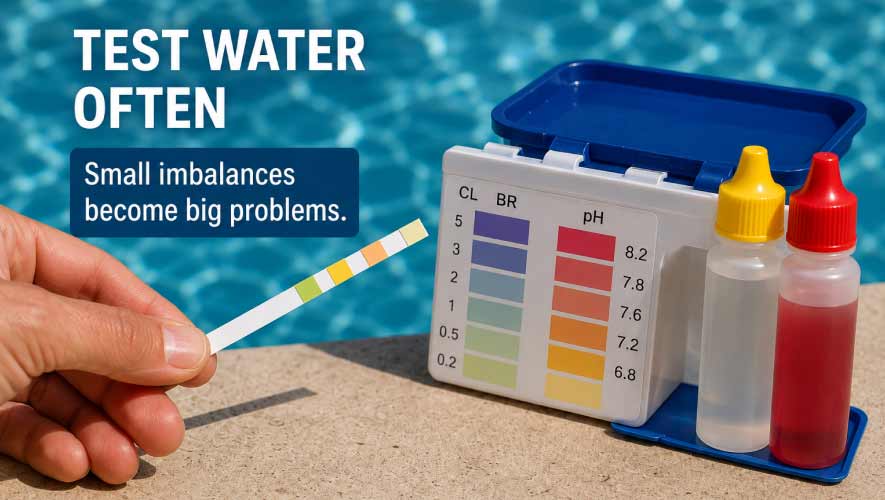
Not Testing Water Often Enough
Hot weather and lots of swimmers make chemistry shift quickly. Chlorine gets used up faster, pH swings, and organic matter from sunscreen, sweat, and body oils builds up. Many owners test once a week or less — and then wonder why the water turns dull or green seemingly overnight.
What to watch for:
- Water looks hazy or dull even when it “should” be clear
- Swimmers complain of itchy eyes or skin
- Chlorine smell that doesn’t go away (usually means combined chlorine is high)
- Early algae on steps or in corners
What to do: Test at least twice a week during peak season (80°F+ days). Test chlorine and pH daily if you have heavy use, kids, or pets in the pool. After a big party, heavy rain, or adding chemicals, test again the next day. Get a full professional water test once a month for calcium hardness and cyanuric acid.
Ideal summer ranges for most outdoor pools:
- Free chlorine: 2–4 ppm
- pH: 7.4–7.6
- Total alkalinity: 80–120 ppm
- Calcium hardness: 200–400 ppm
- Cyanuric acid (stabilizer): 30–50 ppm
Catching imbalances early prevents bigger (and more expensive) problems.
Running the Pump Too Few Hours
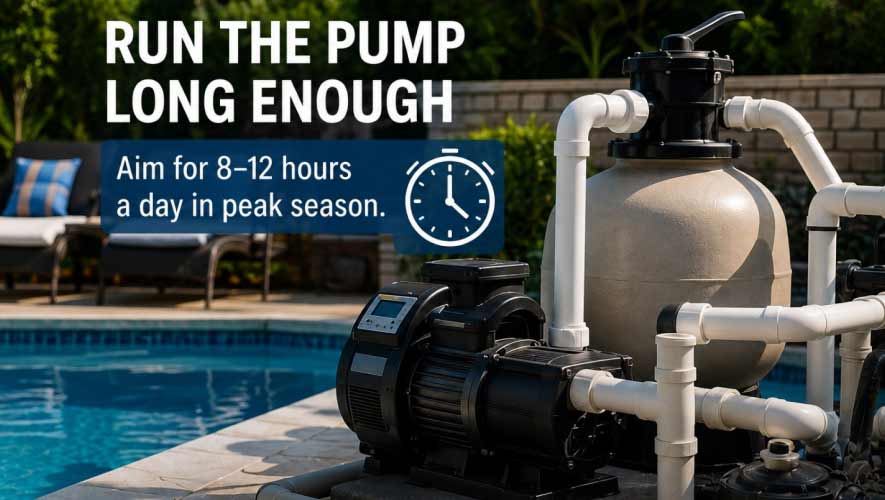
A lot of owners run the pump 4–6 hours a day because that’s what they’ve always done. In peak season that’s usually not enough. Poor circulation lets debris settle, chemicals don’t distribute evenly, and algae gets a foothold.
Recommended runtime: 8–12 hours per day in summer for most residential pools. Aim for at least one full water turnover daily. In very hot climates or with heavy use, lean toward the higher end. You can split the time (morning and evening) or run it during the sunniest hours so the chlorine works harder.
If your energy costs are a concern, consider a variable-speed pump — it moves the same amount of water on lower speeds for far less electricity.
Skipping Daily Skimmer and Pump Basket Cleaning
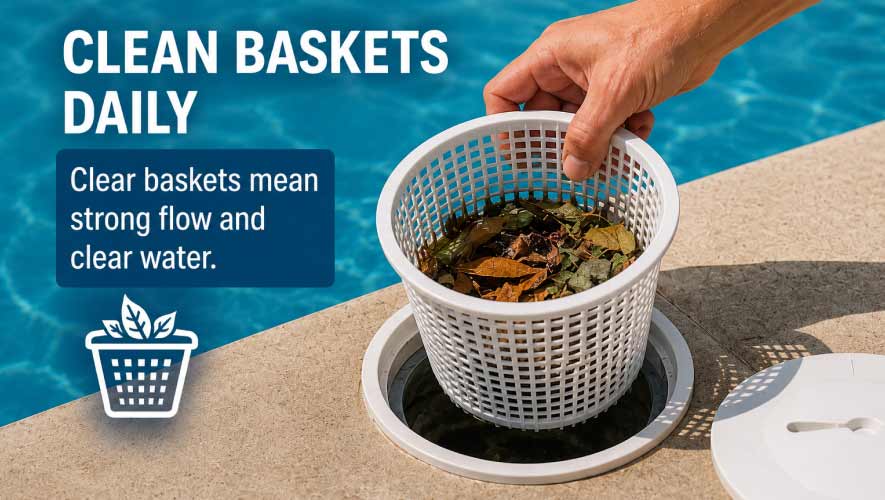
When baskets fill with leaves, bugs, and sunscreen residue, water flow drops dramatically. The pump works harder, filtration suffers, and you get cloudy water or algae faster.
Quick habit that pays off: Check and empty the skimmer and pump baskets every day or at least every other day during peak season. A 30-second task prevents hours of frustration later. While you’re there, glance at the water level — it should sit in the middle of the skimmer opening.
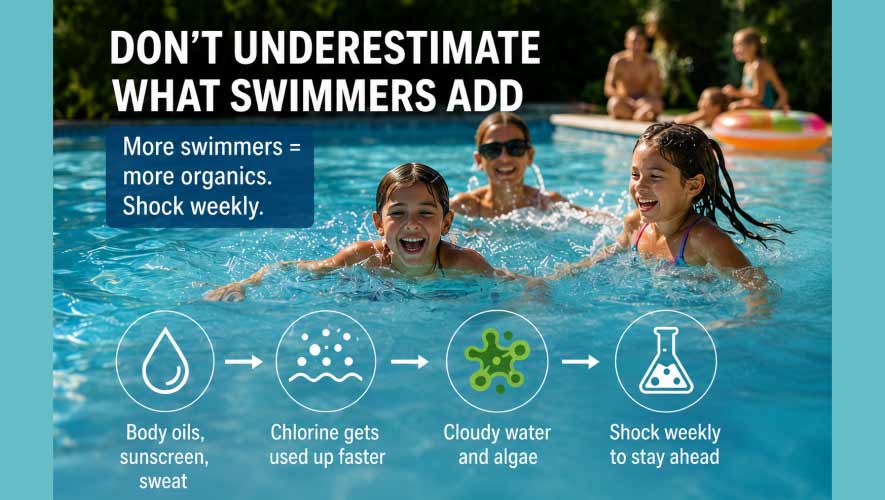
Underestimating What Swimmers Do to the Water
Every person who jumps in adds body oils, sweat, sunscreen, hair products, and sometimes worse. In hot weather these organics consume chlorine rapidly and create the perfect conditions for cloudy water and early algae — often before you see any green.
Warning signs:
- Water turns hazy a day or two after a busy weekend
- Musty or “chlorine” smell that won’t go away
- Dull appearance even after shocking
Prevention: Shock the pool weekly (or right after heavy use) to burn off organics. Use a clarifier if the water starts looking dull. Brush walls and floor at least once a week — algae loves to hide in corners and on steps. Vacuum as needed.
Letting Small Liner and Equipment Issues Slide
Many common problems with thin liners—such as wrinkling, fading, and algae growth on the surface—are characteristic specifically of thin vinyl liners that are 20–27 mil thick. These lighter materials are more sensitive to pH fluctuations, ultraviolet light, and organic contaminants.
Thick pool liner, or reinforced PVC membranes with a thickness of 60 mil, such as Cefil, are significantly more resistant to these problems. They feature an outer layer of acrylic lacquer that protects against fading in the sun, as well as antibacterial additives that significantly reduce the risk of algae growth on the surface. The greater thickness and reinforcement prevent tears, stretching, and, as a result, the formation of folds.
What to look for in thin vinyl liners:
- Folds or wrinkles (often due to low pH)
- Fading or brittle areas at the waterline
- Small tears or punctures near ladders and steps
- Low water levels that expose the liner to direct sunlight
How to protect a thin vinyl liner:
- Never drain more than one-third of the water without professional supervision. Complete draining can cause shrinkage and permanent creases in thin liners.
- Maintain the pH between 7.4 and 7.6.
- Dissolve shock treatment and chlorine in a bucket before adding them to the pool. Avoid prolonged use of floating chlorinators and placing tablets directly into the skimmer.
- Use only vinyl-safe waterline cleaners and the correct vacuum nozzle.
- Maintain a normal water level—when the water level is low, the liner is more susceptible to UV damage.
- Repair small tears and leaks immediately using a high-quality vinyl repair kit.
With proper care, a thin liner will last 5–7 years. Regular maintenance protects your investment—and thick, reinforced PVC membranes offer even greater durability and a service life of 20+ years.
Letting Small Liner and Equipment Issues Slide
Cloudy water on Monday often becomes a full algae bloom by Thursday if you wait. Strange pump noises, weak suction, or rising chemical costs are all signals something needs attention.
Make it simple: Create a quick weekly checklist:
- Test water (chlorine & pH at minimum)
- Empty skimmer and pump baskets
- Brush walls and steps
- Check water level and top up if needed
- Run pump the recommended hours
- Shock if it’s been a heavy-use week or water looks off
Do these things and most big summer headaches never appear.
Peak season doesn’t have to mean constant firefighting. The owners who enjoy clear, inviting water all summer long are usually the ones who treat maintenance as a short, regular routine instead of a weekend project. Test more often, run the pump longer, stay on top of the little cleaning tasks, and give your liner and equipment the same attention you give the fun parts of owning a pool.
Do that consistently and you’ll spend less time fixing problems — and more time actually using your pool.
If you’re looking for a more durable, low-maintenance option that resists fading, wrinkling, and surface algae, thick 60-mil reinforced PVC membranes like Cefil are an excellent choice. SAKKO POOL, the official U.S. representative of the European manufacturer Cefil, supplies and installs these premium membranes.
Have Questions?
Talk to our specialist! Just fill out the form, and we’ll give you a call!
FAQ
Other articles on this topic

Custom Tanning Ledges: Why ICF + Cefil 60-Mil Beats Gunite & Thin Vinyl
Long-Term Pool Sustainability: ICF + Cefil 60-Mil for 20+ Years
Multi-Use Wellness Pools: ICF Structure + Cefil 60-Mil Membrane

Modern Pool Design: LED Lighting, Textures & 60-Mil Membranes

The True Cost of Owning a Pool: ICF & 60-Mil PVC ROI Explained
Family Pool Design with ICF & 60-Mil PVC Membrane: Safe for All Ages