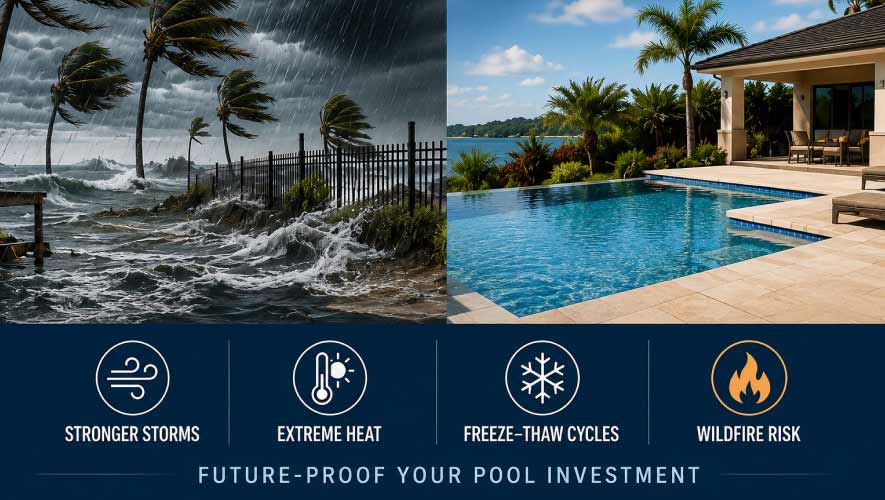
Climate change is intensifying extreme weather across the United States. Stronger hurricanes impact the Southeast and Gulf Coast, record heat and drought affect the Southwest, harsh freeze-thaw cycles challenge northern states, and erratic rainfall puts pressure on pools everywhere. These conditions expose weaknesses in traditional designs, leading to cracks, leaks, and high repair costs.
Future-proofing your pool means choosing construction methods and materials built for durability, flexibility, and low maintenance so your investment delivers enjoyment for decades. Two technologies stand out for resilience in any US climate: Insulated Concrete Form (ICF) construction for a stronger, better-insulated shell, and 60-mil reinforced pool liners that flex with ground movement and resist UV, chemicals, and storm damage for 20+ years.
Regional Climate Challenges
Pools across the US face different threats depending on location:
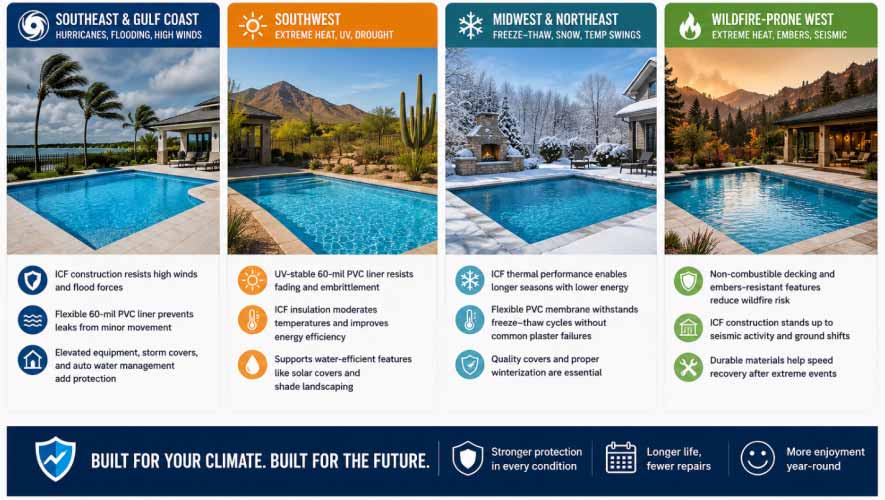
- Southeast & Gulf Coast (including Florida): Hurricanes, high winds, storm surge, and flooding that exploit sandy soils and high water tables.
- Southwest: Intense UV radiation and prolonged droughts with water restrictions.
- Midwest & Northeast: Repeated freeze-thaw cycles, heavy snow loads, and rapid temperature swings.
- Wildfire-prone West: Extreme heat, ember exposure, and seismic considerations in some areas.
Stronger storms and temperature extremes accelerate wear nationwide. A professional site assessment evaluating wind loads, flood risk, soil, and climate trends is essential.
Principles of Resilient Pool Design
Resilient pool design is built on four key principles:
- Site-specific engineering — Reinforced foundations, monolithic construction, and strategic elevation or flood barriers matched to local conditions.
- Superior drainage and grading — Proper site work that prevents water from pooling around the shell during storms.
- Thermal stability — Insulation that minimizes temperature swings, reducing stress on the structure and liner while lowering energy use.
- Smart automation — Systems that enable quick adjustments before and after extreme weather events.
These principles create a more reliable backyard asset.
Material Choices for Durability
The shell and liner most strongly influence long-term performance.
Traditional gunite or concrete pools with plaster frequently crack from soil movement, freeze-thaw cycles, or flooding.
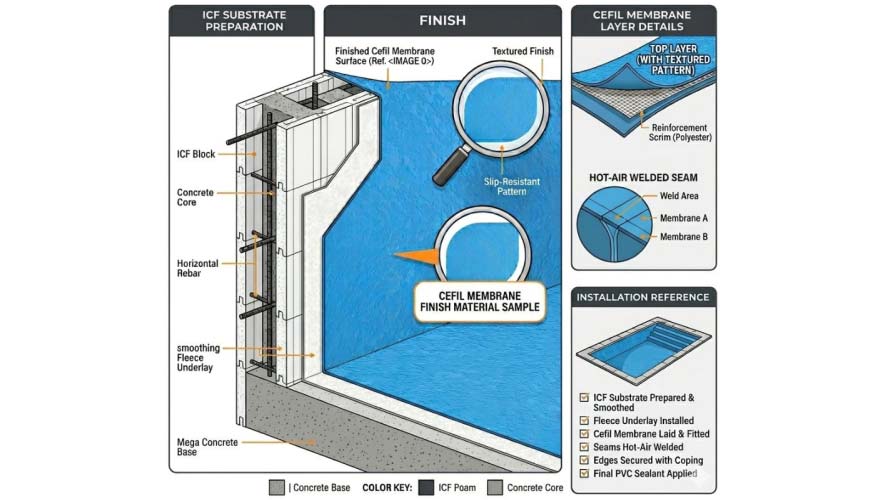
Insulated Concrete Form (ICF) construction offers a stronger alternative. The monolithic reinforced concrete shell, formed with permanent insulated blocks, provides exceptional resistance to high winds, flooding pressure, and ground shifts. Built-in insulation stabilizes temperatures and reduces heating costs.
Thin 20–27 mil vinyl liners tear easily and degrade quickly under UV and chemicals.
Premium 60-mil reinforced PVC membranes (such as Cefil) deliver significantly better performance:
- Extra thickness with polyester scrim reinforcement for outstanding puncture and tear resistance.
- High flexibility that allows the liner to move with the shell during ground shifts or freeze-thaw cycles without cracking.
- Non-porous surface that resists algae and staining even after dirty floodwater or storm debris.
- Excellent UV stability and chemical resistance for a typical 20+ year service life.
- Faster and more cost-effective renovation solution compared to traditional resurfacing.
Pair the system with UV-resistant, slip-resistant decking suited to your climate.
Regional Adaptations
While core principles apply nationwide, local adaptation maximizes protection.
In wildfire-prone areas, non-combustible decking and protected equipment reduce risk while durable construction aids recovery.
In Southeast hurricane zones, ICF shells resist wind and flood forces while flexible 60-mil PVC liners prevent leaks from minor movement. Elevated equipment, storm covers, and automatic water management add protection.
In hot Southwest regions, UV-stable thick PVC liners resist fading and embrittlement. ICF insulation moderates temperatures and supports water-efficient features like solar covers and shade landscaping.
For cold northern climates, ICF thermal performance enables longer seasons with lower energy. The flexible PVC membrane withstands freeze-thaw cycles without common plaster failures. Quality covers and winterization are essential.
Maintenance and Upgrades for Lasting Resilience
Even resilient pools need proactive care:
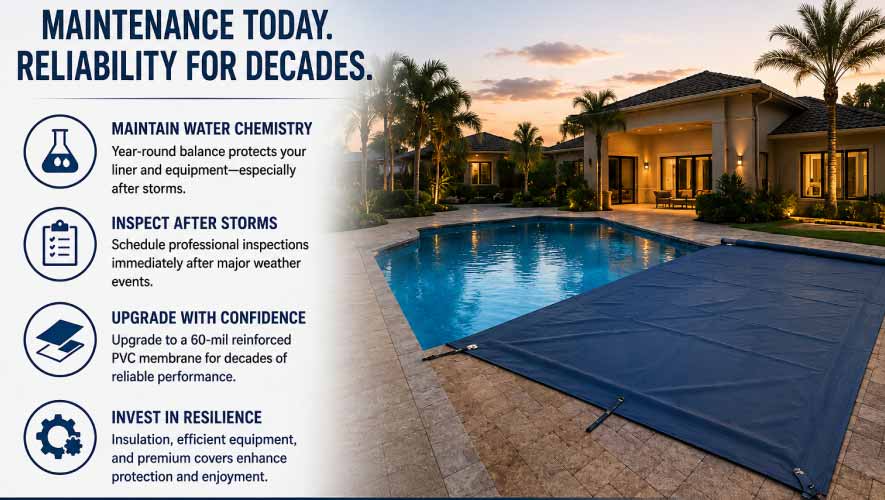
- Maintain balanced water chemistry year-round to protect the liner and equipment, especially after storms.
- Schedule professional inspections immediately after major weather events.
- Upgrade older pools to a 60-mil reinforced PVC membrane during renovation to resolve chronic issues and add decades of service life.
- Add insulation, energy-efficient equipment, and premium covers to boost resilience and enjoyment.
The Value of Future-Proofing
Investing in resilient design and premium materials protects your pool investment, reduces long-term costs, extends usability, and delivers peace of mind. Pools built with ICF construction and 60-mil reinforced PVC membranes typically require fewer repairs and retain performance far longer than conventional options.
As extreme weather intensifies across the United States, these choices turn pools into dependable backyard assets rather than liabilities.
SAKKO POOL specializes in ICF block construction and premium Cefil 60 mil reinforced PVC membranes — solutions proven in demanding Florida conditions and adaptable nationwide. Contact us today for a consultation tailored to your location and risks. Let’s design or renovate a pool built for lasting enjoyment no matter what the climate brings.
Have Questions?
Talk to our specialist! Just fill out the form, and we’ll give you a call!
FAQ
Other articles on this topic
Modern Pool Design: LED Lighting, Textures & 60-Mil Membranes
The True Cost of Owning a Pool: ICF & 60-Mil PVC ROI Explained
Family Pool Design with ICF & 60-Mil PVC Membrane: Safe for All Ages
Pool Construction Mistakes: 7 Most Expensive Errors to Avoid
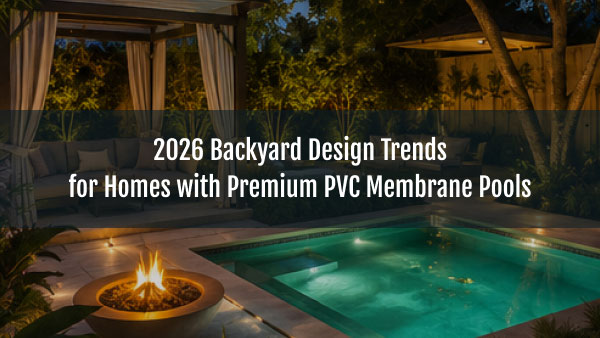
Backyard Design Trends for Homes with Premium PVC Membrane Pools