When planning a swimming pool, many owners initially consider traditional thin vinyl liners (20–27 mil) due to their lower price. However, a technical comparison with modern thick reinforced PVC membranes (60 mil/1.5 mm), such as Cefil, Alkorplan, or Elbtal, reveals significant drawbacks that affect safety, durability, and total cost of ownership. The data below is partially based on research and recommendations presented in the VINYL POOL TECHNICAL MANUAL published by CGT (Canada General Tower), one of the world’s largest manufacturers of vinyl pool liners. Here are the main issues with thin PVC liners.
Critical Risk of Cold-Temperature Cracking in Folds
According to the CGT manual, liners with a thickness of 20–27 mil must never be unfolded or installed at temperatures below 16 °C (60 °F), and extreme caution is required even at 10–15 °C (50–59 °F). At 3–10 °C (38–50 °F)—common conditions in spring or fall in most regions—the material becomes brittle. Folds formed during storage and transportation concentrate stress, leading to microscopic cracks and linear tears that are often only discovered after the pool is filled. Therefore, it is recommended to store and transport such liners in large boxes that exclude any external impact.
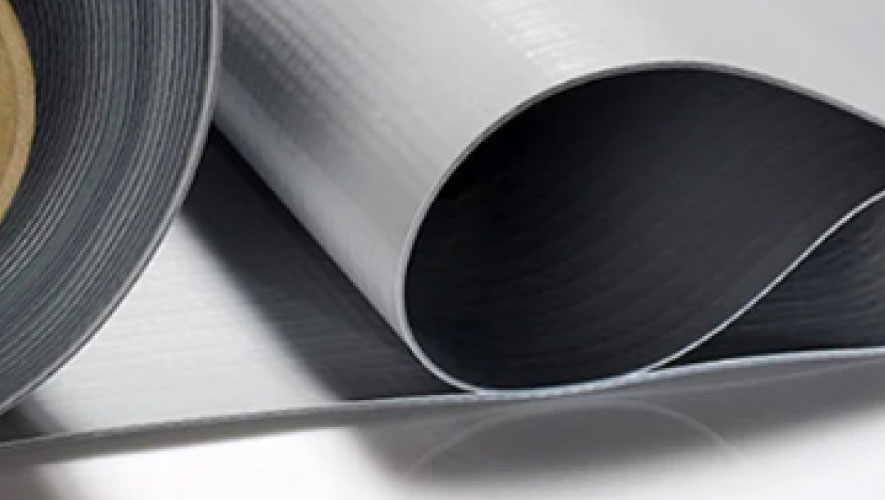
Thick reinforced membranes with a thickness of 60 mil retain full flexibility down to –30 °C (–22 °F) and can be safely transported and installed year-round without the risk of cracking at low temperatures. They are produced in rolls, which doesn’t even imply the formation of any folds.
Severe Loss of Thickness During Installation
The CGT technical manual explicitly warns that over-stretching a 27 mil liner can reduce wall thickness by 20–25%, leaving only 20–22 mil in vertical sections and corners. This premature thinning significantly accelerates degradation from UV exposure and mechanical wear. A reinforced membrane with a thickness of 60 mil is manufactured as a non-shrink, non-stretch three-layer sheet with an internal polyester mesh as the middle reinforcing layer. This type of 60 mil pool liner maintains its full thickness during installation and provides long-term durability compared to thin vinyl liners. The installed thickness remains 59–60 mil across the entire surface, providing uniform protection for decades.
Permanent Wrinkling and Aesthetic Degradation
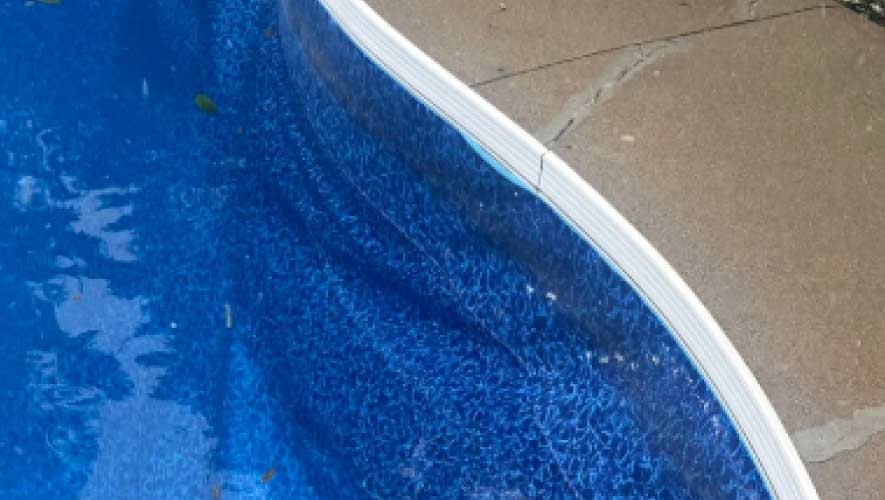
CGT research confirms that unreinforced liners with a thickness of 20–27 mil absorb water, and free plasticizers migrate under normal chlorine levels (1–3 ppm) and elevated temperatures. This leads to irreversible dimensional growth and deep wrinkles, especially under automatic covers or in indoor pools. Wrinkles accumulate dirt, complicate cleaning, and become breeding grounds for black algae.
Dramatically Lower Mechanical Strength and Puncture Resistance
Independent tear-strength tests (ASTM D1004) cited in industry literature show that a 27 mil liner has a tear resistance of approximately 8–12 lbf, while a reinforced membrane with a thickness of 60 mil and polyester mesh exceeds 45–55 lbf. This provides a 4–5 times advantage. Everyday incidents (toys, pet claws, dropped tools) that merely scratch a thick membrane without causing significant damage can create irreparable holes in thin liners.
Significantly Shorter Service Life
| Material | Expected Realistic Lifespan |
| Thin vinyl liner 20–27 mil | 6–10 years |
| Thick reinforced liner 60 mil / 1.5 mm | 18–25+ years |
After just 8–10 years, a thin liner typically shows widespread fading, brittleness, and seam separation, requiring full replacement at a cost of $4,000 to $9,000 for an average residential pool. A thick PVC membrane with proper care will last 25–30 years.
Significantly Shorter Service Life
The CGT manual specifies strict limits: calcium hardness 200–400 ppm, total alkalinity 80–120 ppm, cyanuric acid 30–50 ppm. Even brief deviations lead to bleaching (especially in blues), metal staining, or plasticizer leaching. Membranes with a thickness of 60 mil are coated with a protective lacquer that contains advanced UV stabilizers and antibacterial additives, providing greater chemical resistance and reducing chemical reagent consumption and maintenance labor by 30–50%.
Inferior Repairability
Patches on liners with a thickness of 20–27 mil are temporary and rarely match the color; most peel off within 1–2 seasons. Tears in reinforced membranes with a thickness of 60 mil rarely occur. If they do appear due to external mechanical impact, they are easily repaired on-site by hot-air welding or applying a patch from similar material.
Higher Total Cost of Ownership Over 20 Years
Despite an initial price 40–60% lower, replacing a thin membrane 2–3 times over 20 years results in 25–40% higher overall costs than installing a single reinforced membrane with a thickness of 60 mil that will last the entire period with minimal intervention.
Have Questions?
Talk to our specialist! Just fill out the form, and we’ll give you a call!
Conclusion
Research presented in the VINYL POOL TECHNICAL MANUAL by CGT, combined with decades of field data, clearly shows that thin vinyl liners with a thickness of 20–27 mil carry unacceptable risks—from fold cracking at low temperatures and significant thickness reduction to chronic wrinkling and early failure. Modern reinforced PVC membranes with a thickness of 60 mil (1.5 mm) eliminate these problems and provide superior mechanical strength, chemical resistance, repairability, and genuine long-term savings. For homeowners and commercial operators who value reliability and low operating costs, thick reinforced membranes with a thickness of 60 mil are the professional standard and the only logical choice. High-quality 60 mil membranes are available at SAKKO POOL, where specialists can guide you through the selection process and help you choose the optimal solution for your project.